KIDS IN FOCUS: Understanding Temporary Assistance for Needy Families (TANF) in Colorado

Temporary Assistance for Needy Families (TANF) is a federal block grant that helps reduce childhood poverty and promote family safety, stability, and self-sufficiency. Each year, Colorado receives roughly $136 million in TANF funds which it uses for direct cash assistance and other family services. In 2023, TANF helped provide cash assistance payments to 47,003 Colorado children living in extreme poverty.
Federal TANF Requirements
TANF is one of the most flexible federal funding streams. States have broad spending discretion so long as dollars are used to support one of four stated purposes:
- “Provide assistance to needy families so that children can be cared for in their own homes or in the homes of relatives
- End the dependence of needy parents on government benefits by promoting job
preparation, work, and marriage - Prevent and reduce the incidence of out-of-wedlock pregnancies
- Encourage the formation and maintenance of two-parent families.”
However, there are a few federal restrictions on spending.
Income Eligibility
Funds can only be used to support pregnant women and families with children who are financially needy. States define who meet this criterion. In Colorado, families are eligible for TANF if they make less than $75,000 a year, with the exception of the basic cash assistance program, which only serves families living in extreme poverty.
Work Requirements
States must meet work participation rate (WPR) requirements, which specify the percentage of families that must be engaged in a work activity while enrolled in a TANF program. Federal law establishes general work activity categories like going to school or job hunting, but states can choose which specific activities they will allow. Examples of eligible work activities in Colorado include subsidized employment, job training, and active job searching.
Time Limit
Families can receive TANF benefits for a total of 60 months. However, states can provide extensions for up to 20% of recipients.
State Contribution
States must commit state funding to receive federal TANF dollars. Each state must spend a dollar amount equal to the percentage of what the state spent on social services prior to the creation of TANF in 1996. This is referred to as the state’s maintenance of effort spending (MOE). In federal Fiscal Year 2022-23, Colorado’s largest MOE spending was on pre-Kindergarten/Head Start and refundable tax credits.
TANF Supports Child Care and Child Welfare
A state can transfer up to 30% of TANF funds to the Child Care Development Fund (CCDF) to support child care subsidies and the Social Services Block Grant (SSBG) to support child welfare services.
TANF in Colorado: Colorado Works
Colorado is one of 10 states that operate a state-supervised, county-administered TANF program. Colorado counties receive a majority of the state’s TANF dollars and have broad spending discretion to meet their local needs. In a study of four county-administered TANF programs, Colorado’s program was found to provide the most county autonomy and least state oversight.
Colorado’s TANF program is known as Colorado Works. Colorado Works helps families move toward self-sufficiency by providing basic cash assistance and other services including individualized case management, education, training, and support to meet career goals.
Basic cash assistance is the largest component of the program. Colorado Works provides modest monthly payments to eligible families for basic needs like food, diapers, clothing, and bus passes. In 2024, families received basic cash assistance for an average duration of five to eight months, depending on the type of household.
The amount of benefits a family receives is based on their household size. For example, an eligible single parent with two children can receive up to $620 per month, or roughly $20 a day. Until recently, the benefit value had not been adjusted to keep up with inflation. In 2022, Colorado made a 10% increase to benefits and added an annual cost of living adjustment (COLA) to prevent further erosion to the value of payments.
Colorado Works Eligibility Requirements
Families must meet state-determined eligibility requirements to participate in Colorado Works and re-certify their eligibility every six months.
Income Eligibility for Career & Support Services
Families qualify for Colorado Works services, excluding basic cash assistance, if their annual income is $75,000 or less. Families must also be pregnant or caring for a child, a U.S. citizen or lawful permanent resident, and living in Colorado.
Income Eligibility for Basic Cash Assistance
In addition to the requirements above, families must be living in deep poverty to receive basic cash assistance. Colorado law establishes the maximum income a family can earn and still be eligible, known as the need standard. This standard varies by household size. For example, a single parent with two children must earn no more than $421 a month, or roughly $5,000 a year. Eligibility for basic cash assistance has not been changed in Colorado in decades.
Monthly Income Eligibility for Basic Cash Assistance

In 2022, Colorado enacted a new rule to disregard new sources of family income for the first certification period that the income impacts, allowing families to continue receiving basic cash assistance for a short period of time after securing higher-paying employment.
Work Requirements
Work-eligible families must comply with an individualized work plan developed with their case manager. Colorado’s program accepts a variety of work activities, including traditional employment, going to school, and applying for jobs. However, there are exemptions from work requirements for families that demonstrate good cause, such as single parents who have an infant at home.
Time Limit
A family can receive benefits for total of 60 months. However, Colorado grants extensions to up to 20% of families who demonstrate good cause, such as single parents who have an infant at home.
TANF Spending in Colorado
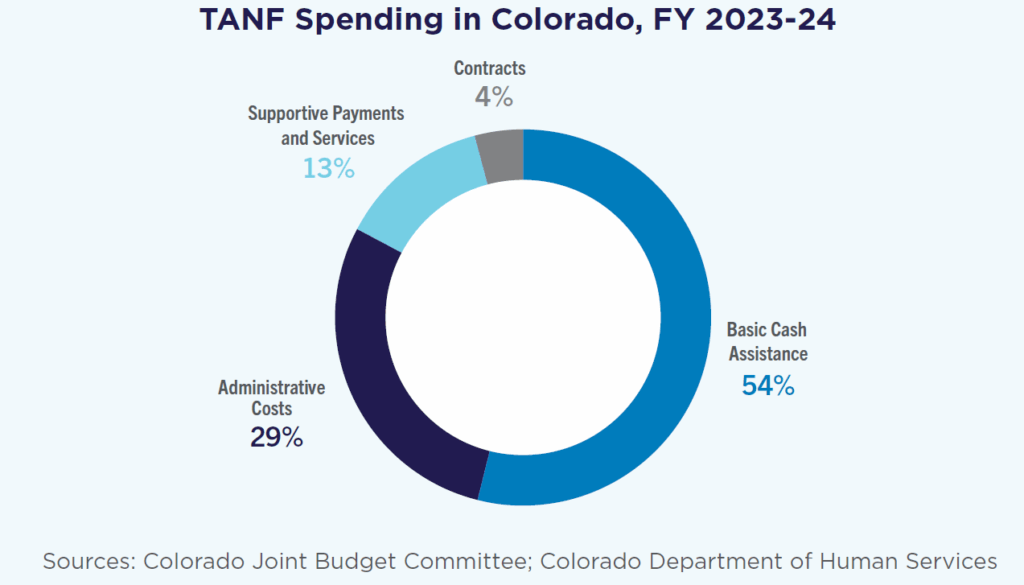
Colorado spent a total of $161.4 million from the TANF block grant and reserves in state Fiscal Year 2023-24. Basic cash assistance was the largest expenditure ($87 million), followed by administrative costs ($46 million), supportive service payments ($21 million), and third-party contracts ($6 million). Currently, there are not state-level data available to further specify how these funds were spent or to track outcomes associated with that spending.
TANF Spending in Colorado, FY 2023-24
State and County Reserves
Colorado maintains a portion of TANF funds in state and county reserves to help respond to evolving needs across years. Colorado is the only state that has separate county-level TANF reserves. According to Colorado law, the state reserve must maintain a minimum balance of $33.9 million, 25% of the state’s annual TANF block grant. Counties can also maintain reserves of up to 40% of their annual TANF allocation or $100,000, whichever is greater. In state Fiscal Year 2024-25, the beginning balance in the state reserve was roughly $87.5 million and the beginning balance of all county TANF reserves was $35.6 million.
Allocations to Counties
The Colorado Works Allocation Committee (WAC), a group of county and state representatives, determines each county’s annual allocation of TANF funds based on an established formula which accounts for demographics and prior year expenditures. The WAC reviews the allocation formula annually and monitors TANF spending. In state Fiscal Year 2023-24, larger metropolitan counties such as Denver, Adams, Arapahoe, and El Paso received the largest percentage of funds, while smaller rural counties like Cheyenne, Hinsdale, and Mineral received the smallest percentage of funds.
Recent TANF Improvements in Colorado
In recent years, Colorado has made a number of policy changes to better support families through TANF spending.
The following policy changes were made by HB22-1259:
- The amount of basic cash assistance was increased by 10% after years without adjustments for inflation other than an increase in 2018.
- An annual cost of living adjustment (COLA) was added to basic cash assistance to prevent further erosion of payment value in the future.
- Eligibility calculations were updated to disregard new sources of family income for the first certification period that the income impacts after a family has secured higher-paying employment.
- Exemptions from work requirements under certain circumstances were established, including for single-parent households with an infant.
- Eligibility criteria were updated to permit people with drug felonies to participate in the program without additional requirements.
- Extensions for the 60-month lifetime limit under certain circumstances were established, including for single-parent households with an infant.
In addition, Colorado has made changes to sanction and re-engagement policies and processes. Families enrolled in TANF face penalties when they are out of compliance with requirements in the program. These penalties include sanctions that withhold all or a portion of basic cash assistance. Due to the lack of evidence to support the effectiveness of sanctions, Colorado made changes to reduce the use of punitive sanctions and to instead increase efforts to reengage families in the program in other ways.
Finally, in 2017, Colorado was the first state to provide the full amount of child support payments directly to families enrolled in TANF and disregard these payments in calculating benefit amounts. Prior to this policy change, families were required to relinquish their rights to these payments in exchange for receiving TANF benefits. Later, in 2020, Colorado passed a law requiring counties be reimbursed at least 90% of their share of child support collections by the state in order for child support payments to continue to be passed through to families.
Learn more about TANF in Colorado:
- Research brief: “Essential, Research-Based Strategies to Modernize TANF in Colorado”
- Blog post: “How Can We Make Sure Colorado’s Efforts to Support Kids Experiencing Extreme Poverty Are Working?”
Sources
1 Colorado Joint Budget Committee. (2024). Staff Budget Briefing FY2025-26 Department of Human Services.
2 Colorado Department of Human Services. (2023). Administrative data request.
3 U.S. Department of Health & Human Services, Administration for Children & Families. (2024). About TANF.
4 Center on Budget and Policy Priorities. (2022). Policy Basics: Temporary Assistance for Needy Families.
5 Colorado Department of Human Services. (n.d.). Colorado Works.
6 U.S. Department of Health & Human Services, Administration for Children & Families. (2024). TANF and MOE Spending and Transfers by Activity, FY 2023: Colorado.
7 Center on Budget and Policy Priorities. (2024). To Strengthen Economic Security and Advance Equity, States Should Invest More TANF Dollars in Basic Assistance.
8 U.S. Department of Health & Human Services, Administration for Children & Families, Office of Planning, Research & Evaluation. (2015). A Descriptive Study of County-Versus State-Administered Temporary Assistance for Needy Families Programs.
9 Colorado Department of Human Services. (2024). Colorado Works (TANF) Annual Report (SFY24).
10 9 CO Code Regs 2503-6. CO Works Rules.
11 Colorado General Assembly. (2024). HB22-1259 Modifications to Colorado Works Program.
12 Code of Federal Regulations. (1999). 45 CFR Part 261—Ensuring That Recipients Work.
13 Colorado Department of Human Services. (n.d.). Colorado Works Allocation Committee.
14 Colorado Department of Human Services. (2024). Works Allocation Committee Meeting.
15 9 CO Code Regs 2503-6, Section 3.608.3. Re-engagement and Good Cause.
16 C.R.S. 26-13-108. Recovery of public assistance paid for child support and maintenance — interest collected on support obligations – designation in annual general appropriations act.
17 C.R.S. 26-2-108. Granting of assistance payments and social services — rules.
 Loading...

 Reload document
  Open in new tab
KIDS IN FOCUS: Essential, Research-Based Strategies to Modernize TANF in Colorado
The Temporary Assistance for Needy Families (TANF) program supports children who are living in poverty. But nearly three decades after its creation, Colorado’s TANF program, known as Colorado Works, needs strategic reforms to ensure the sustainability of the program and transform TANF into a more effective support for child well-being and family economic mobility.

The TANF program was created in 1996 to promote family safety, stability, and self-sufficiency. Because TANF is a block grant to states from the federal government, states have some flexibility in how they use funds as long as they remain within the bounds of TANF’s stated purposes. This allows states to pursue innovative strategies, but it also means that TANF dollars have not always been used effectively to promote meaningful outcomes for kids and families.
For the past several years, national and state organizations, advocates, and policymakers have called for the modernization of TANF, which has used largely the same approach to distributing resources since 1996.1 In Colorado, recent policy changes have started moving the TANF program toward a more child- and family- centered approach.
But to maximize the TANF program’s potential to create lasting positive outcomes for children and families, Colorado’s policymakers should take steps to:
- Invest TANF dollars solely in research-based strategies that promote child well-being and long-term family economic security, including cash assistance, child care, and certain types of education and training supports.
- Establish and require progress toward holistic, family-centered outcome measures to ensure the effectiveness of investments.
Current Limitations of Colorado’s TANF Program
Colorado has made significant improvements for families in the TANF program in recent years, including improving cash assistance, reducing punitive sanctions, and helping families increase their income while smoothing their off-ramp from the program. However, the TANF program in Colorado currently does not have a comprehensive, data-driven approach to investing in evidence-based strategies that reliably advance meaningful outcomes for families.
Colorado operates a county-administered TANF program with limited state oversight. While many counties do invest TANF dollars in research-supported services, Colorado has not had standardized, detailed information on how counties are spending TANF dollars or standardized outcome measures to determine the effectiveness of these investments.
In addition, Colorado does not currently use TANF dollars in a way that incentivizes the achievement of meaningful outcomes for children and families.
A bill passed in 2025 will make TANF spending data more transparent and standardized. It also requires the program to establish outcome measures. These will be the first steps toward a more effective TANF program and will help inform efforts to re-envision the program in Colorado. But Colorado still needs a statewide, comprehensive approach for how to best spend TANF funds and provide effective oversight for the program.
Recent federal policy changes, including the budget bill passed by Congress in 2025, will create new strains on Colorado’s budget and benefits systems at the state and county level. It is more important than ever to maximize every dollar of TANF funds in Colorado to ensure the sustainability of the TANF program and support children and families in the most effective ways possible.
Research-Based Strategies for TANF
Supporting Children’s Well-Being and Long-Term Family Economic Security
Colorado should only fund supports and services in the TANF program that are based in evidence, support child and family well-being and long-term economic stability, and can be tied to robust outcome measures. These include cash assistance, child care, and certain types of education and training supports.
Cash Assistance
Consistent, monthly cash payments and targeted cash transfers are evidence-based strategies that alleviate childhood poverty, support child development, and increase family economic mobility.
Childhood poverty has significant negative effects on children’s short and long-term well-being. Children living in poverty are more likely to face health issues and engage in risky behaviors, and less likely to meet academic standards and increase earnings as adults.
Several studies have shown that even modest amounts of cash assistance have positive impacts on outcomes for children, including increased birthweight, increased cognitive functioning as infants, improved behavioral and educational performance, and increased adult earnings.
Monthly Cash Payments: Basic Cash Assistance
TANF Basic Cash Assistance payments are one of the most flexible forms of assistance — one of only a few that families can use to purchase necessities like infant diapers, bus passes, or gasoline.
Numerous studies have pointed to the benefits of this type of cash assistance for children and families. Cash assistance mitigates the effects of extreme poverty, helps families afford necessities for their children, prevents child maltreatment and homelessness, and improves overall childhood experiences and development.
Monthly cash transfers are known to:
- Improve long-term economic standing: Cash assistance helps families get employed, ultimately improving a household’s long-term economic standing. A study focused on a cash assistance program in California found that after one year, cash assistance helped increase employment among 12% of participants compared to an increase among only 5% among participants who did not receive cash assistance.
- Reduce child welfare involvement: Economic hardship is often a driver of involvement in the child welfare system. By increasing a family’s financial stability, basic cash assistance makes children less likely to experience abuse, neglect or interaction with the child welfare system. In fact, states with a more limited system for cash assistance have higher rates of child maltreatment and foster care placements.
- Prevent homelessness: Greater access to cash assistance is associated with lower rates of family homelessness. A study in Washington state found that a basic cash assistance payment in the prior month reduced the likelihood of an episode of homelessness by 56%. Another study in Michigan found that monthly cash assistance payments substantially reduced evictions for families.
- Support child development: Financial resources help improve child development and school achievement. Even in their earliest years, children can benefit. The Baby’s First Years research study found that cash transfers to families resulted in increased infant brain activity, which is associated with a child’s development and cognitive skills. Additionally, a study in Michigan found that monthly cash assistance payments led to fewer premature and low birthweight births. While the Baby’s First Years study also recently found that cash transfers did not have a statistically significant impact on the specific child development outcomes measured in the study, there is overwhelming evidence that cash assistance has a variety of positive impacts on children and families.
Monthly cash payments are already a key component of the TANF program in Colorado. Families living in extreme poverty that participate in the program receive monthly stipends to help them afford their basic needs. (See information about eligibility here.)
Targeted Cash Transfers: Supportive and Supplemental Payments
Supportive and supplemental cash payments are provided to families for a specific purpose and can help families cover the cost of housing or access transportation.
These targeted cash transfers mitigate the effects of childhood poverty and improve economic mobility. Supportive and supplemental payments are known to:
- Support employment: In Colorado, people who received a supportive payment were roughly 10% more likely to enter employment. Families who received transportation assistance through supportive payments were more than twice as likely to be employed when they left the program.
- Increase children’s long-term earning power: Helping families avoid crisis supports children’s long-term stability. For example, one study found that an annual supplemental payment of $3,000 in a child’s first years led to a 19% increase in their earnings as adults.
- Increase housing stability: Payments that help families afford rent, utilities, and other housing necessities help families maintain their current housing and avoid episodes of homelessness.
Families who participate in TANF in Colorado identified housing and transportation as two areas of high need. Other states have implemented innovative, effective supplemental payments for housing and transportation through TANF, including rental assistance, reimbursement for transportation costs, access to a vehicle, and regional transportation services in rural areas.
Currently, Colorado’s counties provide supportive payments to families on a discretionary, case-by-case basis. There is not a statewide strategy to prioritize the types or forms of payments that are tied to evidence of positive outcomes for families, or to make sure payments are distributed consistently to families who need them based on a specific set of criteria or needs.
Child Care
Child care helps families get to work or school and improve their economic standing while ensuring their child is in a safe and nurturing environment. Families enrolled in TANF often cannot find child care they can afford. This limits their ability to work, pursue career goals, and move toward economic security.
Historically, families enrolled in TANF were automatically eligible for the Colorado Child Care Assistance Program (CCCAP), which provides child care assistance to eligible families while they work or pursue an education. When implemented effectively, CCCAP is known to increase employment and earnings for parents. However, Colorado recently stopped allowing automatic eligibility for TANF families due to CCCAP funding constraints. This both increases the financial strain of child care costs on TANF families and reduces their ability to pursue education or training to support their economic mobility. This is especially challenging in Colorado where child care is among the most expensive in the country.
Education and Training Support
Evidence-based education and training programs such as career pathways, sector-based training, and work-based learning help parents access higher-paying, more sustainable employment opportunities.
When implemented effectively, career support programs lead to a high return on investment. For example, participants in the Colorado Works Subsidized Training and Employment Program (CW STEP), which serves TANF families facing significant barriers to employment, were more likely to be working in higher-paying positions, even several years after participating, according to a recent evaluation of the program. After exiting the program, participants had higher rates of employment, higher earnings, and more stable connections to employers.
Colorado is missing opportunities to help TANF families advance their careers. Only 36% of families reported that Colorado Works helped them find or maintain employment and just two in 10 families reported receiving a professional license or certification or taking a course toward their career goal while enrolled in the program.
Holistic, Family-Centered Outcome Measures
Ensuring strategies are effectively supporting families and children
In addition to investment in research-based strategies, Colorado must develop holistic, family-centered outcome measures and require reporting on progress toward these measures when strategies are implemented. This will help ensure TANF dollars are being spent wisely and that programs are effectively supporting families.
Right now, Colorado’s TANF program does not require or incentivize the achievement of meaningful outcomes. It primarily tracks short-term outcomes like job attainment. Programs run by contracted providers are not consistently selected or evaluated using holistic and family-centered outcomes measures.
Other states and programs use outcomes measures to confirm that services are beneficial for families. For example, Wisconsin’s TANF program currently uses performance-based contracting, which requires contractors to meet certain performance measures for payment, and increasingly prioritizes incentives for achieving longer-term outcomes for families enrolled in the program, such as job retention and higher wages.
Making TANF Work for Children and Families
The children and families who are served by TANF are living in extreme poverty. This program is one of the most targeted efforts available to support children and families’ immediate needs while also setting them up for a stronger future. It is essential that Colorado act as a good steward of TANF funds.
By investing in evidence-based strategies and using forward-looking, family- and child-centered outcomes based measures to understand what works, Colorado can make a meaningful difference in the lives of children and families living in extreme poverty.
Colorado leaders have many opportunities to ensure TANF dollars effectively alleviate extreme poverty and support children and families in moving toward economic stability.
Case Management in TANF
Case management — one-on-one interactions between case managers and families who participate in TANF — helps shape a family’s experience and outcomes in the TANF program. High-quality case management is an effective way to understand families’ unique needs and design and provide support accordingly. However, traditional TANF case management has not been shown to have a significant positive impact on outcomes for families. Other models of case management, such as employment coaching, have been found to promote more positive outcomes for families.
Colorado’s case management system should ultimately prioritize deeper, quality interactions with families to support the achievement of long-term, family-centered outcomes, including by streamlining administrative requirements, allowing case managers to focus more on barrier removal and career readiness, and involving families as ongoing co-creators of their goals and plans.
Exclusively Invest in Evidence-Based Strategies
Colorado leaders should only use TANF dollars to provide research-supported programs for children and families. These programs include:
- Monthly cash payments: Colorado should continue to invest in and prioritize monthly cash payments.
- Supplemental payments: Colorado should strengthen its approach to providing supplemental payments to ensure they target identified critical needs and areas backed by research like housing and transportation. These payments should be implemented using a consistent, strategic approach that ensures all families who need them while enrolled in the program are able to access them.
- Child care: Colorado should prioritize families enrolled in TANF for access to child care through state-supported programs. The state should also designate a portion of TANF funds to help provide subsidized child care for families enrolled in the TANF program.
- Education and training supports: Colorado should prioritize investments in evidence-based education and training supports to ensure long-term economic mobility for families participating in TANF. In addition, the state should leverage the broader system of workforce development and supports that already exists in the state to connect TANF families to evidence-based education, employment training and career pathway supports that align with families’ needs and goals.
Establish and Track Holistic, Family-Centered Outcome Measures
Colorado should establish and require progress toward holistic, family-centered outcomes measures to ensure services are implemented effectively. These measures must:
- Prioritize long-term impact: Instead of measuring short-term job attainment or more immediate progress, measures should be tied to child and family well-being and long-term economic stability. Examples of child and family well-being measures include:
- Enrollment in health insurance
- Participation in maternity care
- Improvement in maternal health outcomes
- Attendance at well-child visits
- Improvement in child health status
- Participation in home visiting programs
- Improvement in educational outcomes, such as school attendance or performance
- Apply to all TANF spending: Some TANF dollars are used to contract with third parties to provide programs and services to TANF families. To assess the impact of all TANF spending, contracts should include these outcome measures and contract payments should be tied to achievement of these measures.
Learn more about TANF in Colorado:
- Research brief: “Understanding Temporary Assistance for Needy Families (TANF) in Colorado”
- Blog post: “How Can We Make Sure Colorado’s Efforts to Support Kids Experiencing Extreme Poverty Are Working?”
Sources
1 American Public Human Services Association. (2021). Core principles for TANF modernization.
2 DC Fiscal Policy Institute. (2016). When every dollar counts: Child poverty has lasting negative effects, but even small income boosts can help.
3 Center on Budget and Policy Priorities. (2022). Three reasons why providing cash to families with children is a sound policy investment.
4 Colorado Department of Human Services. (2025). The impact of investing TANF dollars in cash transfers (basic cash assistance).
5 Stockton Economic Empowerment Demonstration. (2019). Key finding: Employment.
6 Chapin Hall. (2023). The role of TANF in economic stability and family well-being and child safety.
7 Center on Budget and Policy Priorities. (2023). Research reinforces: Providing cash to families in poverty reduces risk of family involvement in child welfare.
8 Paroline, Z. (2021). Income support policies and the rise of student and family homelessness. The ANNALS of the American Academy of Policy and Social Science, 693(1):46-63.
9 Shah, M.F., et. al. (2015). Predicting homelessness among low-income parents with TANF.
10 Hanna, M., et. al. (2025). Hardship and hope: The relationship between unconditional prenatal and infant cash transfers, economic stability, and maternal mental health and well-being. American Journal of Public Health.
11 Troller-Renfree, S.V., et. al. (2022). The impact of a poverty reduction intervention on infant brain activity. Proc. Natl. Acad. Sci. U.S.A., 119 (5).
12 Agarwal, S., et. al. (2025). Perinatal cash transfers and birth outcomes: A population-based quasi-experimental study of the Rx kids unconditional cash prescription during pregnancy and infancy.
13 Hart, E.R., et. al. (2024). The effect of unconditional cash transfers on maternal assessments of children’s early language and socioemotional development: Experimental evidence from U.S. families residing in poverty. Developmental Physiology, 60(12): 2290-2305.
14 Colorado Department of Human Services. (2025). Data Brief – Transportation Assistance: Colorado Works Leavers Survey.
15 Center on Budget and Policy Priorities. (2022). TANF can be a critical tool to address family housing instability and homelessness.
16 Public Consulting Group & Colorado Department of Human Services. (2023-2024). Colorado Works Leavers Survey 2023-2024 annual report.
17 American Public Human Services Association. (2023). Advancing promising practicing to support transportation needs of families in TANF.
18 Center for American Progress. (2022). 4 reasons the U.S. economy needs comprehensive child care.
19 First Five Years Fund. (n.d.). Working families.
20 The Bell Policy Center. (2023). Affordability of care in Colorado.
21 U.S. Department of Health & Human Services, Office of the Assistant Secretary for Planning and Evaluation & Urban Institute. (2016). Effects of the CCDF subsidy program on employment outcomes of low income mothers.
22 Child Care Aware of America. (2024). 2024 price of care: Child care affordability analysis.
23 U.S. Department of Health & Human Services. Pathways Clearinghouse evidence snapshots.
24 Colorado Department of Human Services. (2025). The impact of investing TANF dollars in education, employment and training.
25 University of Boulder Department of Economics and Institute of Behavioral Science, University of Notre Dame Department of Economics & Wilson Sheehan Lab for Economic Opportunities. (2025). Evaluation of the CW STEP program.
26 Colorado Department of Human Services. (2025). The impact of investing TANF dollars in case management.
Loading...
KIDS IN FOCUS: Rising Needs, Limited Resources: Homelessness and Colorado's Children

Colorado children are facing a worsening homelessness crisis. The number of children experiencing
homelessness or unstable housing has increased significantly, and the state’s resources and supports are not fully meeting the growing need. In just one year, between 2023 and 2024, the number of children living in a shelter or on the street more than doubled.
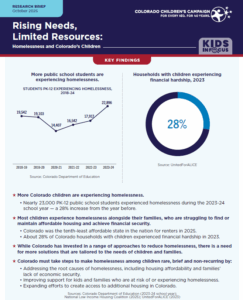
Periods of homelessness have significant effects on children’s long-term health and well-being. Children who have experienced homelessness are less likely to graduate from high school on time and are more likely to experience traumatic events. They are also at a higher risk for lifelong social-emotional and physical health challenges.
Children most commonly experience homelessness alongside their family, often because of economic insecurity and difficulty affording housing. While Colorado has invested in a range of approaches to reduce homelessness, many are not tailored to the unique situations of children. Colorado’s policymakers and communities can take steps to make sure every child grows up with the stability of a home by addressing the most common root causes of homelessness. Solutions to end homelessness for Colorado’s children must promote economic stability, expand affordable housing, and be designed with the specific needs of families with children in mind.
Homelessness and Colorado’s Children: What the Data Show
Understanding just how many children are experiencing homelessness is challenging. Definitions vary across data sources, and families or children who are experiencing homelessness may not have touchpoints with organizations trying to collect information. For this reason, Colorado relies on multiple sources, including schools, state agencies, and federal counts, to track the scope of the issue. While each source has limitations, it is clear that too many children are experiencing homelessness, and the need for targeted supports is growing.
Colorado Department of Education: McKinney-Vento Homeless Education Program
The McKinney-Vento Homeless Education Program is a federally funded program that serves public school students experiencing some form of unstable housing, including those living in shelters, hotels, motels, or doubled-up arrangements with a friend or family member. This program provides the most consistent and robust measure of children ages 4 to 18 experiencing homelessness.
In the 2023-24 school year, 22,896 public school students experienced unstable housing. That was roughly 5,000 more students than the year prior, or a 28% increase. Most of these students (90%) were living with their family, often in a doubled-up arrangement.

More than half of the students served by the McKinney-Vento program were Hispanic or Latino, and most of the growing need between the 2022-23 and 2023-24 school years was among this group. In the 2023-24 school year, Hispanic and Latino students accounted for 61% of students served by the McKinney-Vento program (13,918), even though they represent just 36% of Colorado’s public-school population. The number of Hispanic and Latino students experiencing homelessness increased by roughly 4,000 in a single year, accounting for about 80% of the growing need in that year.

U.S. Department of Housing & Urban Development Point-in-Time Count
The U.S. Department of Housing and Urban Development (HUD) requires localities to conduct a Point-in-Time Count of people experiencing homelessness each January to track trends over time. Colorado’s Point-in-Time Count found that between 2023 and 2024, the number of children experiencing sheltered or unsheltered homelessness more than doubled, from 2,291 to 4,781. This count includes children who were staying in an emergency shelter, safe havens, or in unsheltered locations.

HUD attributes the increase to a mix of factors, including the affordable housing crisis, rising inflation coupled with stagnating wages, and the end of homelessness prevention and economic support programs that were put in place during the COVID-19 pandemic, including the expanded child tax credit. In Colorado, the rise was due in part to an increase of immigrants and asylum seekers in Colorado who could not find affordable housing during that time period. Between 2022 and 2024, Denver was one of the largest contributors to the 43% increase in sheltered homelessness nationwide. New research estimates that nationally, asylum seekers accounted for about 60% of that increase.
Other Measures of Homelessness
In 2025, a group of Colorado researchers looked across multiple state departments to more accurately describe the number of teens without a stable home. They estimated that between 2018 and 2022, some 33,041 children ages 14-17 experienced homelessness. Hispanic and Black children were disproportionately more likely to experience homelessness than white children.
There is limited data on children under 5 experiencing homelessness, in part because many are not yet in school. However, national studies suggest that younger children are at an elevated risk for unstable housing. For example, one study estimated that 42% of U.S. children experiencing homelessness were under the age of 6. A more recent Colorado survey estimated that 10.3% of Coloradans who gave birth in 2023 lacked stable housing, suggesting that their young children might also experience housing instability.
Common Causes of Homelessness Among Children
Children most commonly experience homelessness alongside their family, often because of economic insecurity and difficulty affording housing.
Many Colorado families do not make enough money to pay for basic needs like rent, utilities, and child care. In 2023, nearly 30% of Colorado families with children were facing financial hardship. This economic insecurity can lead to periods of homelessness as families struggle to consistently afford housing alongside other costs like child care and food.
Even families who are working face difficulty affording housing because their wages are too low to keep up with growing expenses. One national study estimated that almost one in five parents experiencing homelessness worked in the week prior to entering a shelter. Among those who were unemployed, many said they were having trouble finding a job.
Some families have difficulty finding reasonably priced housing in the first place, and some are evicted from their current home because they cannot pay their rent. Many Colorado communities have a shortage of housing options that are affordable for residents. Colorado was ranked the tenth least affordable state in the nation for renters in 2025. In 2023, Colorado had a shortage of more than 134,000 affordable and available units for people living at or below the federal poverty level. At the same time, households with children are more likely to be evicted than adult-only households, and low-income families are the most likely to face eviction.
Unaccompanied Youth
Some children experiencing homelessness are unaccompanied minors, or children living without caregivers. This type of homelessness is of a different nature than children experiencing homelessness with their family. Unaccompanied youth most often experience homelessness because they run away from home or are kicked out following extreme family conflict, such as abuse or neglect. This could also include migrant youth. In the 2023-24 school year, about 10% of students served by the McKinney-Vento program were living without a parent or guardian. Youth in the foster care system and LGBTQ youth are also at a higher risk of homelessness.
Existing Support & Services
In Colorado, there are a range of state-level efforts to support people who are experiencing or at risk of being unhoused and to prevent homelessness. But many services are over capacity, under-resourced, and not designed to specifically target the unique needs of children and families. Nationally, only 39% of families living in a shelter received dedicated assistance to help them access more stable housing. Nearly 80% of low-income U.S. households with children who were eligible for federal rental assistance did not receive it.
Homelessness among families with children is often different in cause and nature than homelessness experienced by a single adult. But many services in Colorado are tailored to and more frequently used by single adults. For example, most emergency shelters do not accept children or do not have safe environments for infants. Families often instead opt for more informal help, such as staying in a doubled-up arrangement with family or friends.
Colorado has limited consistent state-wide support designed specifically for children and families. Local nonprofit organizations often take on the responsibility of helping children experience homelessness. While experts in the field, these organizations struggle to keep up with demand.
Promising Practice: Next Step 2-Generation Rapid Re-Housing
The Next Step 2-Generation Rapid Re-Housing program aims to help improve housing stability and academic outcomes for children and families in Colorado. The Office of Homeless Youth Services within the Colorado Department of Local Affairs Division of Housing and the Colorado Department of Education partner to support students and their caregivers at risk of or experiencing homelessness through rehousing and wraparound supports such as move-in assistance, temporary rent support, and case management.
Opportunities to Better Support Children & Families
Colorado’s policymakers and communities can help make homelessness among children rare, brief, and non-recurring. To do so, they must address the root causes of homelessness for families, expand targeted supports for children and families, and increase affordable housing options for families.
Colorado leaders have many opportunities to better support children and families experiencing homelessness.
Address the root causes of homelessness, including housing affordability and families’ lack of economic security.
Colorado leaders must support housing stability for families through policies that promote economic security and housing affordability, including:
- Income support: Colorado must protect programs that put cash directly into the pockets of low-income families and maximize their impact. Such programs include cash assistance through the Temporary Assistance for Needy Families Program (TANF), food assistance through the Supplemental Nutrition Assistance Program (SNAP), and health coverage through Medicaid.
- Housing assistance: Colorado must protect and maximize funding for emergency rental assistance programs and housing subsidies available to low-income households, and explore ways to increase access to housing assistance for families with children.
- Tax credits: Colorado must ensure families continue to have access to refundable tax credits that increase family income, including the Child Tax Credit, Earned Income Tax Credit, and Family Affordability Tax Credit, that help families afford the cost of necessities.
- Child care: Colorado must expand access to safe, affordable child care for low-income families, so parents can work to provide for their children and continue growing their careers, and so that child care does not take over families’ budgets, leaving little left to afford other needs, including housing.
Improve support for kids and families who are at risk of or experiencing homelessness.
Colorado must make families with kids and youth a focus of housing instability and homelessness policies and programs, including:
- Improve access to services during an episode of homelessness: Colorado must improve access to services that support youth and children who are experiencing homelessness, including early childhood programs, wraparound supports like home visiting, and school-based and out of school time programs. Increased coordination among state agencies that serve children and families can increase access to these types of supports. Colorado must also include a focus on children and families who are facing particularly significant barriers to housing stability, including supports for unaccompanied youth and newcomer families.
- Include a focus on children and families in new and existing housing programs: Colorado must expand the scope of existing services, such as supportive housing programs, to include a focus on the unique needs of families with children.
- Improve data on family homelessness and housing instability: Colorado must continue to improve the collection and publication of data on eviction trends and other indicators of housing instability across the state to illuminate the resources and policy solutions needed to address and prevent homelessness and housing instability for families.
Expand efforts to create access to additional housing in Colorado.
Colorado must expand affordable housing options throughout the state. To be successful, efforts must:
- Both develop and preserve housing options that are affordable for families living in poverty.
- Develop housing that includes 2- and 3-bedroom units for families with children.
- Expand zoning for affordable multi-family housing to include neighborhoods with quality schools and access to child care and other services.
Sources
1 Colorado Department of Education. (2024). Graduation Statistics.
2 The Annie E. Casey Foundation. (2023). Preventing and Ending Youth Homelessness in America.
3 School House Connection. (2022-2023). Infant & Toddler Homelessness Across 50 States.
4 Colorado Homeless Management Information System. (2025). Colorado’s First Annual State of Homelessness Report 2024.
5 Colorado Department of Education. (2023-24). Homeless Education Data.
6 U.S. Department of Housing & Urban Development. (2024). 2024 AHAR: Part 1 – PIT Estimates of Homelessness in the U.S.
7 The University of Chicago, Becker Friedman Institute for Economics. (2025). Asylum Seekers and the Rise of Homelessness.
8 Center for Policy Research, Colorado Evaluation & Action Lab, University of Colorado School of Medicine. (2025). Building a Sustainable and Replicable Approach to Estimating the Prevalence of Youth Homelessness: Final Report.
9 Child Care Services Association. (2021). An Invisible Crisis: Early Childhood Homelessness – A Primer.
10 National Center for Children in Poverty. (2009). Homeless Children and Youth: Causes and Consequences.
11 Colorado Department of Public Health & Environment. (2023). Baby & You 2023 birth cohort data.
12 UnitedForALICE. (2025). The State of ALICE in Colorado.
13 National Network for Youth. (2019). Accurately Defining Homelessness: A First Step Towards Ending Youth Homelessness.
14 U.S. Department of Health & Human Services, Administration for Children and Families, Office of Planning, Research and Evaluation. (2018). Employment of Families Experiencing Homelessness.
15 National Low Income Housing Coalition. (2025). Colorado.
16 National Low Income Housing Coalition. (2023). Housing Needs By State: Colorado.
17 Graetz, N., et. al. (2023). A comprehensive demographic profile of the US evicted population. PNAS, 120:41.
18 Urban Institute. (2019). How Many Children Experience Eviction During Childhood?
19 National Network for Youth. (2015). What Works to End Youth Homelessness.
20 National Center for Children in Poverty. (2009). Homeless Children and Youth: Causes and Consequences.
21 Morton, M. H., Samuels, G. M., Dworsky, A., & Patel, S. (2018). Missed opportunities: LGBTQ youth homelessness in America.
22 National Alliance to End Homelessness. (2020). Fewer Than 4 in 10 Families with a Shelter Stay Have Dedicated Permanent Housing Support to Exit Homelessness.
23 Center on Budget and Policy Priorities. (n.d.). 77% of Low-Income Renters Needing Federal Rental Assistance Don’t Receive It.
24 School House Connection. (2022-2023). Infant & Toddler Homelessness Across 50 States.
Loading...
KIDS IN FOCUS: Colorado Families Need Help Affording Child Care

Child care is an important part of how families support their children’s growth and balance work and other responsibilities. But parents often face challenges in finding an arrangement that fits their needs, desires, and budgets. Nearly one in four (23%) Colorado parents of 12-month-old babies did not have a child care arrangement that matched their preferences, according to the Colorado Department of Public Health & Environment’s Baby & You Survey Program.
The high cost of care and limited options made it difficult for families to use the child care arrangement they wanted, whether they preferred a child care center or a more informal arrangement.
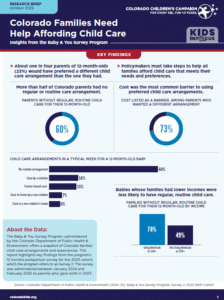
Nearly three-quarters of parents (73%) who were not using their preferred child care arrangement said cost was the biggest barrier, and nearly half (48%) reported challenges with options or availability.
The survey finds that families meet their child care needs in a wide variety of ways. A majority of families did not have a routine arrangement for care, and many of those who did have routine arrangements relied on relatives or other trusted adults to provide care.
Colorado has made significant progress in helping families afford licensed child care in recent years. But Colorado’s policymakers must take steps to help families afford and access the type of care they want and need, both in formal and more informal settings.
About the Data
Through the Baby & You Survey Program, a representative sample of parents who give birth in Colorado were invited to participate in four surveys throughout the first three years of their child’s life. Surveys are administered when the child is 3-4 months old, 12 months old, 2 years old, and 3 years old.
This report analyzes data from Survey 2 for the 2023 birth cohort, which was administered to parents between January 2024 and February 2025 when their child was around 12 months old. There were 999 responses from birthing parents out of the 1,529 parents (65.3%) in the 2023 cohort who were still living in Colorado.
Child Care Arrangements
Parents use a variety of different child care arrangements in Colorado. More than half of parents who participated in the survey (60%) did not have a routine child care arrangement for their 12-month-old. These parents were likely staying at home with their child or piecing together care in different ways week by week.
Parents with a routine child care arrangement most commonly had a relative (16%) or center (15%) care for their baby. Seventeen percent of families were using multiple types of child care, often combining some form of relative and non-relative care. About 71% of families with a routine arrangement were paying for care. Most families who did not pay for care had a family member caring for their baby.

Child Care Choices Among Parents With Lower Incomes
Parents with lower incomes were more likely to have a parent or relative care for their baby. Nearly 80% of families enrolled in Medicaid or CHP+ did not have a routine child care arrangement, compared with 50% of families who were not enrolled in public health coverage. Among families
enrolled in Medicaid and CHP+ who did have a routine care arrangement, care from a relative was most common. About 35% of these parents had a relative care for their baby in the relative’s home and 22% had a relative care for the baby in their own home.

Most parents with lower incomes were using their preferred child care arrangement (80%), but high costs may have limited their choices. Many formal child care options are too expensive for low-income families. In 2024, a family of four living in poverty would have needed to spend 67% of their income to afford infant care at a child care center. For this reason, some parents may be forced to step out of the workforce to take care of their baby. This can have long-term implications for a family’s financial security. A parent making $60,000 a year who stops working for five years could have nearly $100,000 less in retirement savings by the end of their career.
About one in three parents (34%), across all incomes, said they had to either quit, change, or not take a new job or educational opportunity to meet their child care needs. This was most common in rural communities (43%). Parents with lower incomes were also slightly more likely to report this challenge than those with higher incomes (35% compared to 33%), however, both of these differences were not statistically significant.
Barriers to Preferred Child Care
Most families were using their preferred type of care (77%). This included parents without a routine arrangement, those who had a family member or friend care for their child, and those whose child was cared for at a center. But about one in four parents (23%) said they wanted a different type or place of care than they currently had.
Cost was the most common reason parents’ child care arrangements did not match their preferences. Nearly three-quarters (73%) of parents who wanted a different form of child care said cost prevented them from using their ideal arrangement. Limited availability or options that met their needs were also common barriers, reported by nearly half of respondents (48%). About 31% of families said both cost and capacity stopped them from using their ideal child care arrangement.
Affording licensed child care has been a significant issue in Colorado for years. Colorado consistently ranks as one of the most expensive states for care. In 2024, Colorado was ranked the 12th least affordable state for infant care in a child care center, with an average cost of $20,978 per year.
I was not able to put her in daycare because it’s $320 per week. Technically, I can afford it, however I would not be able to make my other bills so… I can’t afford it. – Parent response, Baby & You Survey 2
Affordability was also the top issue for families who were looking for less formal child care like an in-home nanny or the ability to stay home with their child. Nearly half of families who did not have their preferred care arrangement wanted some form of in-home care, and a fourth wanted to have a parent stay home with their child.
I don’t want to send my baby right after the birth to child care and I wasn’t earning enough money to afford a nanny at home. So I had to quit my job to take care of my baby. – Parent response, Baby & You Survey 2
Opportunities to Increase Child Care Affordability and Access and Support Family Choice
Colorado has made significant investments in early childhood in recent years to help families access and afford child care through Early Head Start and Head Start, the Colorado Child Care Assistance Program (CCCAP), and the Colorado Universal Preschool Program. However, there is more work to be done to make child care for babies and toddlers truly affordable for all families — including for those who may not currently qualify for existing state support but are still struggling to make ends meet.
As policymakers seek to improve Colorado’s child care system, solutions must help more Colorado families access and afford child care that meets their needs and preferences.
Colorado leaders have many opportunities to better support families in accessing child care.
- Make child care more affordable through public investment. The high cost of child care limits parents’ ability to choose the child care they believe is best for their baby and family. Policymakers must expand and increase public dollars for child care, especially for families with children between the ages of 0-5.
- Expand the capacity of infant and toddler child care providers. Some families could not access their preferred type of child care because there were not enough spots at providers that met their needs. Policymakers must invest in expanding providers’ capacity to care for infants and toddlers in a variety of settings.
- Enhance data systems. Policymakers need more information on existing programs, capacity,
and child care demand. Leaders must create a comprehensive data system to track and report better information on the child care market at the local level to see where and how kids are being served and better target resources. - Streamline regulatory systems. Policymakers must streamline regulations, licensure, and data systems to reduce administrative burdens and make it easier for providers to focus on delivering care. By simplifying and aligning these systems, leaders can create a more efficient child care system that better supports families’ access and providers’ ability to serve their communities.
- Expand and invest in other supports like paid family leave. Many parents want the opportunity to stay home with their child, especially when they are an infant. Policymakers must continue to improve and expand programs like FAMLI to make this an affordable option for more families.
Sources
1 The Bell Policy Center. (2023). Affordability of Care in Colorado.
2 Child Care Aware of America. (2025). 2024 Price of Care: Child care affordability analysis.
3 First Five Years Fund. (2024). Fact Sheet: Child Care and the Economy.
4 Colorado Department of Early Childhood. (FY 2023-24). Administrative data request.
5 Colorado Department of Early Childhood. (2025). Colorado Universal Preschool Program: SY 2023-24.
6 Colorado Department of Labor and Employment. (2025). FAMLI by the Numbers.
Loading...

2024 Colorado Children's Campaign Annual Report
PRESIDENT’S LETTER
In 2024, the Colorado Children’s Campaign helped support serious investment and serious changes to the systems that serve kids in our state.
At the state capitol, our passionate team helped create a new tax credit that could cut our state’s child poverty rate in half. We supported a separate tax credit that will make a big difference for our state’s careworkers. We advocated for better data about evictions. We supported family planning and health coverage for children.
And – after many years of committed, creative, collaborative work, we helped Colorado make landmark progress in funding our state’s K-12 schools equitably and more adequately.
Outside the capitol, our annual KIDS COUNT report highlighted bright spots – like an increasing graduation rate – and challenges – like the rising cost of living – facing Colorado kids. We brought together a community that is passionate about making our state a great place to be a kid and raise a family at our advocacy events. And we helped tell the story of kids in our state through our work with the media and in our own communications and publications.
You can learn more in this annual report.
Work like this is a testament to the power of having an organization like the Children’s Campaign, which can step outside the fray, listening to our community and using data and research to help our state can take better care of children.
We can’t wait to continue our work for kids, together.
Thank you for your support!
Onward!
Heather Tritten
President and CEO

CHILD AND FAMILY HEALTH
Priority Bills
A better birth and postpartum care system: Health care before, during, and after birth can shape the future for babies and their families. HB24-1262 will improve data collection related to care during the perinatal period, identify ways to protect communities against health facility closures, create a map of maternal health care deserts, and build a process for reporting discrimination.
Support for reproductive health care: SJR24-008 highlights the importance of funding for health clinics that are part of Colorado’s Family Planning Program. It demonstrates Colorado’s support for making sure everyone has access to family planning and reproductive health care.
Healthy School Meals for All: In 2023-24, students across the state had access to free breakfast and lunch in schools through the Healthy School Meals for All program, which voters approved in 2022. The program faced funding challenges in its first year due to a combination of high enrollment, a change to the federal reimbursement rate, and the rising costs of food. The Joint Budget Committee identified a solution to fund universal school meals through the 2025-26 school year to make sure kids can continue to access healthy food at school.
EARLY CHILDHOOD
Priority Bills
Child care licensing resources in languages other than English: HB24-1009 will help Coloradans who speak Spanish access child care licensing resources so that young children and their families can access quality care in the language they speak at home.
An effective Colorado Department of Early Childhood: The Colorado Department of Early Childhood, which began operating in 2022, is growing and supporting a wide variety of programs to support early childhood. HB24-1332 extends the Department of Early Childhood’s executive rulemaking authority to allow it to run effectively.
FAMILY ECONOMIC PROSPERITY
Priority Bills
Cutting Colorado’s child poverty rate in half: The Family Affordability Tax Credit created through HB24-1311 will put more money into the hands of families and help cut the child poverty rate in Colorado in half. This refundable tax credit for families with children prioritizes low-income families with young children. When combined with the Earned Income Tax Credit and Child Tax Credit, it has the potential to make Colorado’s child poverty rate the lowest in the country.
A tax credit for careworkers: Careworkers play a vital role in our communities, but their pay often does not reflect the value of their work. HB24-1312 provides a $1,200 refundable tax credit to certain child care and health care workers, helping support the people who provide children and families with the care they need.
Understanding evictions in Colorado: Babies and toddlers are more likely to be evicted from their homes than Americans of any other age. Colorado’s rates of eviction have soared in recent years. But the state does not have a thorough, accessible statewide data system that reports information about evictions. SB24-064 will improve the way Colorado collects and publishes data on eviction trends across the state, leading to better policy solutions to keep families housed.
YOUTH SUCCESS
Priority Bills
A fair school finance formula and more funding for education: Since 1994, Colorado has used a school finance formula that sends more funding per student to school districts in some of the state’s wealthiest areas. HB24-1448 creates a new formula that will instead send more state funds to students living in poverty, students learning English, and students who have special needs. Also in 2024, the Joint Budget Committee fully funded public schools for the first time in a decade. These two decisions made the 2024 legislative session a historic year for investment in public education.
Money for out-of-school programs: HB24-1331 creates a grant program for organizations to provide academic enrichment and other services when school is not in session, such as before or after school or during the summer break. The grant program will serve about 15,000 young people each year. It is the state’s first permanent investment in out-of-school programs and will support programs that would likely have shut down as pandemic-era funding ran out.
SPEAK UP FOR KIDS!

In 2024, we partnered with Clayton Early Learning to hold our annual Speak Up for Kids Day advocacy event. Hundreds of people from across Colorado gathered at the Colorado State Capitol to receive advocacy training from our policy experts, connect with legislators, and make their voices heard in support of kids.
CONNECTION RECEPTION
The 2024 Colorado Children’s Campaign’s Connection Reception brought together supporters, partners, and policymakers from across the state who are working to create better outcomes for Colorado kids and families. The 2024 event celebrated Reilly Pharo Carter, Steffanie Clothier, and Zach Martinez at Gary Community Ventures as our Advocates of the Year and Rep. Julie McCluskie, Rep. Jennifer Bacon, Sen. Paul Lundeen, and Sen. Rachel Zenzinger as our Legislators of the Year.


Report: The Impact of Continuous Medicaid and CHP+ Enrollment on Children in Colorado
Download the entire Continuous Medicaid and CHP+ Enrollment Report PDF.
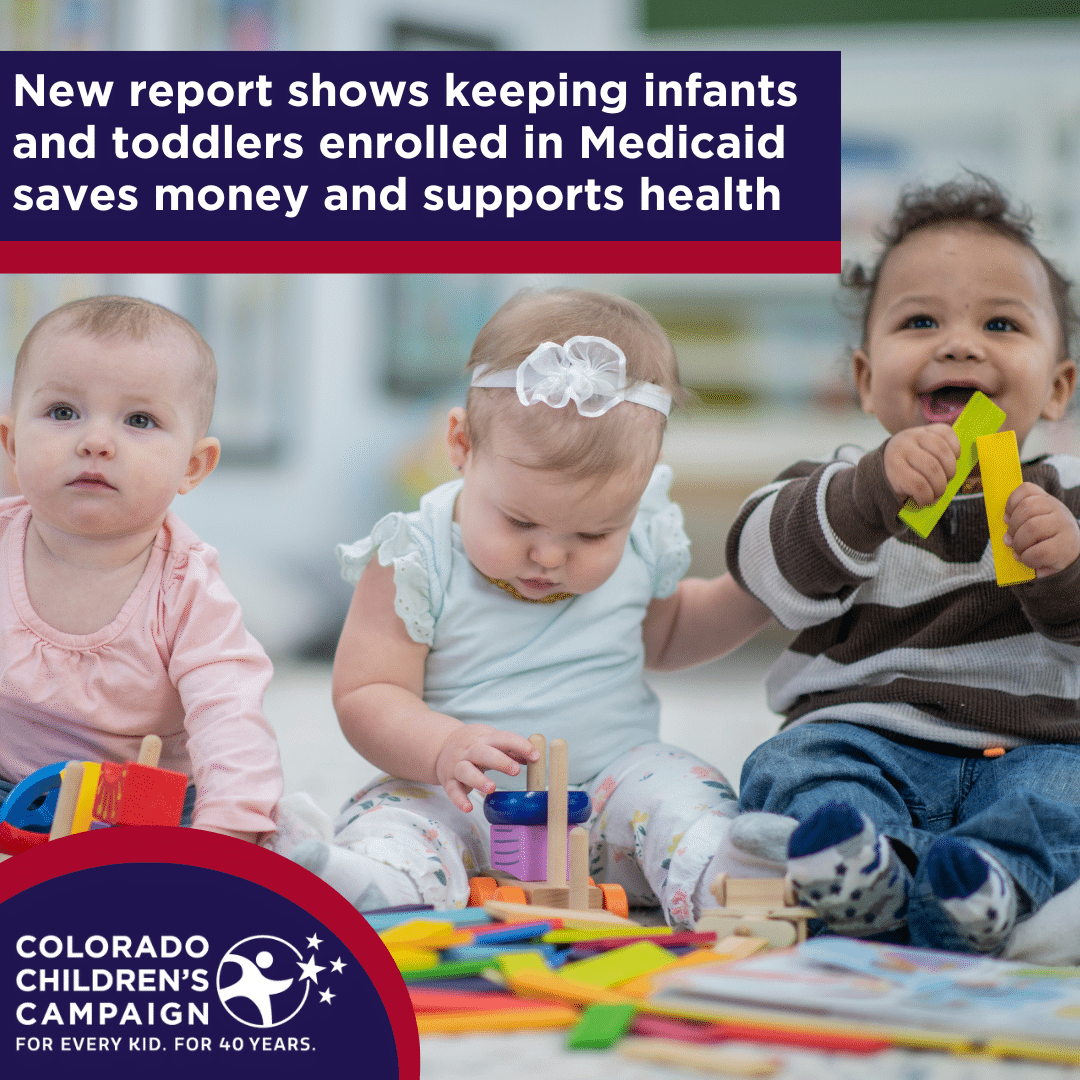
From 2020 until the end of 2023, people who were enrolled in public health programs like Medicaid or CHP+ could maintain health coverage without having to constantly submit paperwork to prove their eligibility, regardless of changes in income or family circumstances. This temporary federal policy change, known as continuous enrollment, was intended to support people’s access to health care during the COVID-19 pandemic.
This report, “The Impact of Continuous Medicaid and CHP+ Enrollment on Children in Colorado,” was produced by the Center for Improving Value in Health Care (CIVHC) on behalf of the Colorado Children’s Campaign, with the support of the Health Equity Fund, an initiative of The Colorado Health Foundation dedicated to advancing health equity across Colorado.
Researchers from CIVHC used real Coloradans’ health records to examine for the first time the health and financial implications of this policy, with a focus on children ages 3 and under.
Researchers found that significant health benefits and cost savings resulted from continuous enrollment. The report’s findings include:
Continuous enrollment policies during the pandemic saved Colorado families and taxpayers money
- In 2022, average total medical bills were 3.2 times higher for children under 3 without continuous coverage than for children with continuous coverage
- In 2024, the families of children under 3 without continuous coverage spent an average of $2,000 more on medical bills than the families of children with continuous coverage
- Colorado could have saved up to $63 million in state, federal, and family spending in 2023 by giving all young kids continuous coverage
Continuous enrollment kept Colorado kids healthier and helped them get care in the right place at enrollment right time.
- In 2024, kids with continuous coverage were 1.5 times more likely to see a primary care doctor.
- In 2022, kids without continuous coverage were 7.5 times more likely to be hospitalized – which can be evidence that children did not get needed preventive care in a more appropriate setting when they needed it or that they lack a health care home.
- In 2022, kids without continuous coverage were 4.5 more likely to be readmitted to the hospital within 30 days.
Download the entire Continuous Medicaid and CHP+ Enrollment Report PDF.
Final Report_Continuous Coverage
Federal Spending and Colorado’s Children

Download the entire Federal Spending PDF.
The federal government provides critical support for Colorado’s 1.2 million kids. Federal funds account for nearly 30% of Colorado’s state budget, which helps to support children and families in finding health insurance, affording food, accessing public education and child care, and meeting other
basic needs.
But changes to the federal budget being considered in 2025 would result in cuts to services or fewer children being served by programs that our country has built to help make sure no child is going without education, food, health care, or other essentials. Recent proposals include significant reductions or changes to Medicaid, the Supplemental Nutrition Assistance Program (SNAP), Temporary Assistance for Needy Families (TANF), Head Start and supports for English learner students.
The programs and services at risk of federal cuts support Colorado kids living in families with low incomes, families in extreme poverty, and families with the least access to health care, food, and child care. But cuts to funding would have ripple effects on the services our state is able to provide to all children and families. Federal proposals for funding cuts change by the day and include a wide range of strategies and policy adjustments across funding streams. This brief outlines the impact of several critical federal investments for Colorado kids.
In Colorado, cuts to federal spending would create a particularly challenging landscape for kids. This year, Colorado legislators faced a $1.2 billion hole in the state budget. And yet the Taxpayer’s Bill of Rights, or TABOR, requires lawmakers to refund revenue above a certain amount and get the approval of voters before raising additional revenue when needed to fund programs. This unique lack of flexibility means Colorado cannot easily raise revenue to replace federal funding. Federal cuts would almost certainly lead to children and families losing important services and supports.
Download the entire Federal Spending PDF.
Legislative & Budget Impacts 2025: Progress for Colorado kids
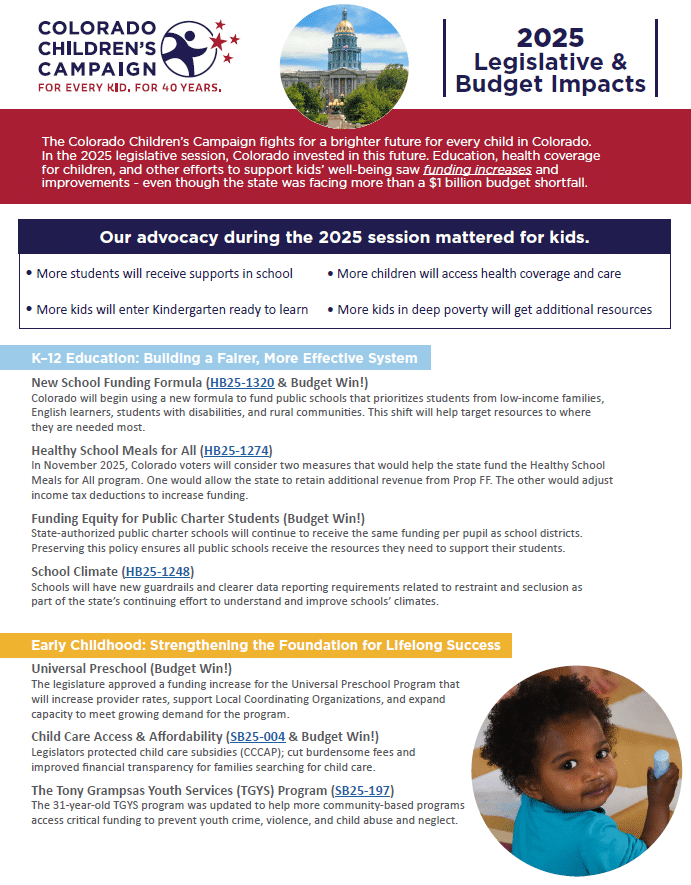
The Colorado Children’s Campaign fights for a brighter future for every child in Colorado. In the 2025 legislative session, Colorado invested in this future. Education, health coverage for children, and other efforts to support kids’ well-being saw funding increases and improvements - even though the state was facing more than a $1 billion budget shortfall.
Our advocacy during the 2025 session mattered for kids:
• More students will receive supports in school
• More kids will enter Kindergarten ready to learn
• More children will access health coverage and care
• More kids in deep poverty will get additional resources
K–12 Education: Building a Fairer, More Effective System
New School Funding Formula (HB25-1320 & Budget Win!)
Colorado will begin using a new formula to fund public schools that prioritizes students from low-income families, English learners, students with disabilities, and rural communities. This shift will help target resources to where they are needed most.
Healthy School Meals for All (HB25-1274)
In November 2025, Colorado voters will consider two measures that would help the state fund the Healthy School Meals for All program. One would allow the state to retain additional revenue from Prop FF. The other would adjust income tax deductions to increase funding.
Funding Equity for Public Charter Students (Budget Win!)
State-authorized public charter schools will continue to receive the same funding per pupil as school districts. Preserving this policy ensures all public schools receive the resources they need to support their students.
School Climate (HB25-1248)
Schools will have new guardrails and clearer data reporting requirements related to restraint and seclusion as part of the state’s continuing effort to understand and improve schools’ climates.
Early Childhood: Strengthening the Foundation for Lifelong Success
Universal Preschool (Budget Win!)
The legislature approved a funding increase for the Universal Preschool Program that
will increase provider rates, support Local Coordinating Organizations, and expand
capacity to meet growing demand for the program.
Child Care Access & Affordability (SB25-004 & Budget Win!)
Legislators protected child care subsidies (CCCAP); cut burdensome fees and
improved financial transparency for families searching for child care.
The Tony Grampsas Youth Services (TGYS) Program (SB25-197)
The 31-year-old TGYS program was updated to help more community-based programs
access critical funding to prevent youth crime, violence, and child abuse and neglect.
Health: Keeping Kids Covered During Critical Years
Cover All Coloradans (Budget Win!)
Colorado will increase public health coverage for undocumented children and pregnant individuals.
More than 16,000 people are already enrolled in coverage through this initiative, which took effect in January 2025.
Child Health Plan Plus (CHP+) (Budget Win!)
CHP+, which provides coverage for more than 90,000 children and pregnant individuals who have low incomes but are not eligible for Medicaid, was fully funded for the 2025-26 fiscal year.
Continuous Coverage for Young Children (Budget Win!)
Beginning in 2026, children who are enrolled in Medicaid or CHP+ will not have to reapply for coverage between the ages of 0 and 3, preventing disruptive gaps in care during the most critical years for child development beginning.
Economic Security: Protecting Kids in Deep Poverty
Temporary Assistance for Needy Families (TANF) (HB25-1279 & Budget Win!)
Families with very low incomes who receive basic cash assistance through TANF will see a cost-of-living increase beginning July 2025. Legislators also passed a bill that will improve data collection for this program, ensuring any future changes are grounded in accountability and real-world impact on kids.
Family Affordability Tax Credit (HB25-1335 & Budget Win!)
The Family Affordability Tax Credit is a refundable, means-tested tax credit providing up to $3,200 per child under 6 and $2,400 per child aged 6 to 16 for eligible families. Legislation protected this vital credit, which is projected to make Colorado’s child poverty rate the lowest in the country and 40% lower than the second-lowest state.
HB25-1320: School Finance Act Explainer and District Information
Download the entire School Finance Act explainer PDF.
Colorado legislators, leaders, and educators worked together across the aisle in 2024 to make two landmark improvements to how Colorado funds education and supports Colorado kids.
First, the state eliminated the Budget Stabilization Factor, a recession-era budgeting mechanism that resulted in the state directing $10 billion away from public education. Second, the state updated the school funding formula for the first time in 30 years. When fully implemented, the new funding formula promises to deliver an additional $500 million to public schools annually. School districts serving students living in poverty, students learning English, and students with special learning needs should see the largest increases.

Just a few months later, in the August 2024 special session, the state reset the property tax rate, causing revenue projections to fall and forcing the state to cut $1.2 billion dollars from the state budget in the 2025 session.
Since then, the governor, legislators, and educators have been working to find a way to fund K-12 education increases within a statewide budget shortfall. In his 2025 budget draft, the Governor suggested that the state eliminate enrollment averaging (an accounting practice that helps districts contend with declining enrollment) and use the savings ($190 million) to pay for the funding increases needed in K-12.
Hearing school district concerns that eliminating enrollment averaging would result in sudden and variable changes to districts’ budgets and ability to staff schools appropriately, Speaker McCluskie negotiated a compromise. The compromise proposal in HB25-1320, described below, would begin implementing the new formula, deliver increased funding to Colorado school districts in July 2025, and ensure predictability and sustainability in the state’s work to increase funding for public schools.
Under this proposal, the total K-12 appropriation for FY 2025-26 would be $10,035,615,918, or a $250+ million increase over FY 2024-25. 21 school districts will be held harmless (no cuts), and the remaining 157 will see an average funding increase of 2.9%. Per-pupil revenue will increase by an average of $380.
The new school funding formula is our best and only chance at sustainably and predictably increasing investment in Colorado's public education system.
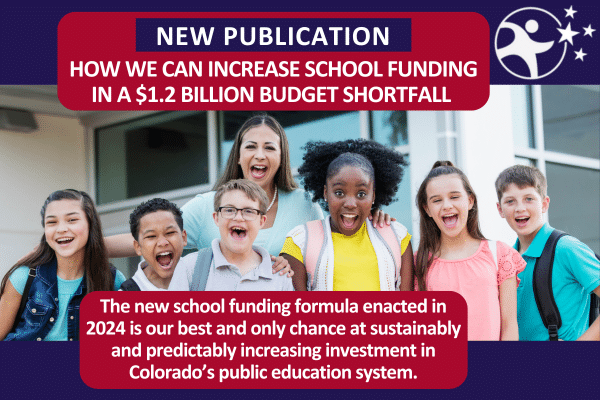
2025 School Finance Act Compromise
The 2025 School Finance Act: How we can increase school funding in a $1.2 billion budget shortfall
Click here to download the publication PDF.
- Colorado legislators, leaders and educators worked together across the aisle in 2024 to make two landmark improvements to how Colorado funds education and supports Colorado kids.
- First, the state eliminated the Budget Stabilization Factor, a recession-era budgeting mechanism that resulted in the state directing $10 billion away from public education.
- Second, the state updated the school funding formula for the first time in 30 years.

Click here to download the PDF. When fully implemented, the new funding formula promises to deliver an additional $500 million to public schools each year. School districts serving students living in poverty, students learning English, and students with special learning needs should see the largest increases.
- Just a few months later, in the August 2024 special session, the state re-set the property tax rate, causing revenue projections to fall and forcing the state to cut $1.2 billion dollars from the state budget in the 2025 session.
- The Governor, legislators, and educators have been working since then to find a way to fund increases in K-12 education inside a statewide budget shortfall. In his 2025 budget draft, the Governor suggested that the state eliminate enrollment averaging (an accounting practice that helps districts contend with declining enrollment) and use the savings ($190 million) to pay for the funding increases needed in K-12.
- Hearing school district concerns that eliminating enrollment averaging would result in sudden and variable changes to districts’ budgets and ability to staff schools appropriately, Speaker McCluskie negotiated a compromise.
- The compromise proposal, described below, would begin implementation of the new formula, delivers increased funding to Colorado school districts in July 2025, and ensures predictability and sustainability in the state’s work to increase funding for public schools.
- Under this proposal, total K-12 appropriation for FY 2025-26 would be $10,035,615,918, or a $256 million increase over FY 2024-25.
- 21 school districts will be held harmless (no cuts) and the remaining 157 will see an average 2.9% funding increase.
- Per-pupil revenue will increase by an average of $380.

The new school funding formula enacted in 2024 is our best and only chance at sustainably and predictably increasing investment in Colorado’s public education system. Support the school finance compromise proposal to support increased funding for public education.